Open, Rinse, Repeat: A Sane Guide to Tinned Pulses

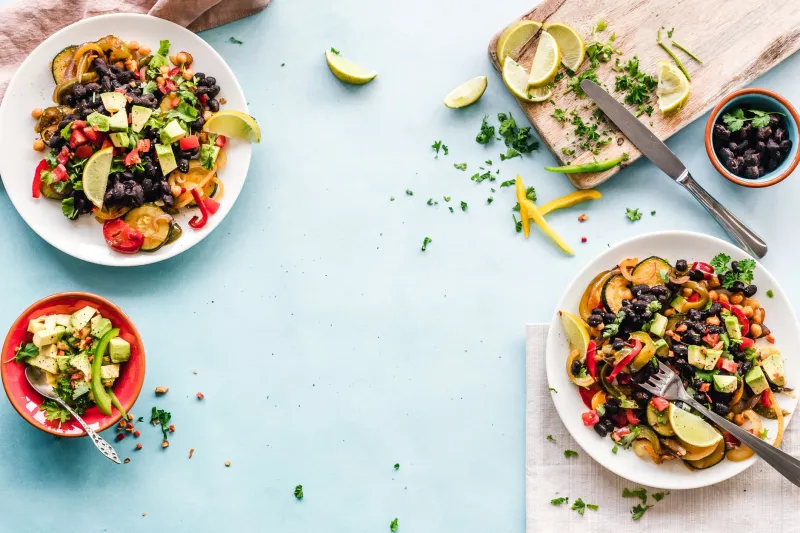
Photo: tinned chickpeas beans lentils open tin on kitchen counter UK, via premiumtrans.vn
There is a short list of things in a UK kitchen that cost under a pound, keep for years, need no planning and can be the backbone of a meal at eight minutes' notice. Tinned pulses sit near the top of it. Chickpeas, kidney beans, butter beans, black beans, green lentils, mushy peas, marrowfat peas, the humble haricot — all of them arrive cooked, in brine or water, ready to drain.
Yet most of us use them in exactly one dish and then forget they exist. This is a case for keeping two or three tins in the cupboard at all times, and for treating them as an everyday ingredient rather than a meat substitute that needs apologising for.
What is actually in the tin
A standard 400g tin drains to roughly 235–250g of edible pulse. That portion typically lands you somewhere around 12–16g of fibre and 15–20g of protein, depending on the bean. For context, the UK guideline for fibre is 30g a day, and most adults manage around 18g. One tin, spread across two meals, closes a good chunk of that gap.
Tinned pulses also bring potassium, iron and folate, and they are naturally low in saturated fat. They are not a magic food and they are not a replacement for meat in any moral sense — they are simply one of the cheapest, most fibre-dense things on the shelf. That is enough.
One practical note: the liquid in the tin is not just water. Chickpea brine whips, and the starchy liquid from a tin of butter beans thickens a soup beautifully. If you are not using it, drain it. If you are making something that benefits from body, keep a spoonful back.
Breakfast: past the obvious
Baked beans on toast is a genuinely good breakfast — around 3–4g of fibre and 5g of protein per half tin, plus whatever the bread brings. But it is not the only option.
Try warming a drained tin of chickpeas in a pan with olive oil, smoked paprika and a pinch of cumin, then scrambling eggs into them. Or mash butter beans with a little lemon and spread them on toast under a poached egg. If you make porridge, a tablespoon of red lentils stirred in at the start disappears entirely and adds thickness and fibre without changing the taste.
For anyone who eats breakfast at a desk, a small tub of drained chickpeas tossed with chopped tomato, red onion and a squeeze of lemon travels well and costs less than a supermarket porridge pot.
Lunch: the ten-minute assembly
The trick with pulses at lunch is to stop thinking of them as the main event and start thinking of them as the bulk that everything else sits on.
A workable formula: one drained tin, something crunchy, something sharp, something oily, something salty. Chickpeas plus cucumber plus lemon plus olive oil plus feta. Butter beans plus red onion plus vinegar plus parsley. Green lentils plus grated carrot plus mustard dressing. None of these need a recipe, all of them keep in a lunchbox, and none of them go soggy in the way a sandwich does.
Dinner: four templates that are not chilli
Chilli is fine. But if the only thing you make with a tin of kidney beans is chilli, you are leaving most of the value on the table.
The traybake. Drained chickpeas, red onion, peppers and whatever root vegetables are in the fridge, tossed in oil and spices, roasted at 200C for 30 minutes, finished with yogurt and lemon. The chickpeas go crisp at the edges, which is the whole point.
The pan soup. A tin of cannellini beans blended into a base of onion, garlic and stock turns a thin soup into something that eats like a meal. Add greens at the end.
The quick dal. Red lentils, tinned tomatoes, onion, garlic, ginger and cumin, simmered for 25 minutes. No soaking, no pressure cooker, no fuss.
The fish-and-bean supper. Butter beans or haricot beans warmed in a pan with garlic and a tin of tomatoes, with frozen white fish laid on top and lid on for eight minutes. A proper dinner for under £3 a portion.
The bloating question, handled properly
Pulses contain oligosaccharides — short-chain carbohydrates that our small intestine cannot fully digest, so they travel to the large intestine where gut bacteria ferment them. That fermentation is exactly why pulses feed a healthy gut. It is also why they can cause wind.
Three things help. First, rinse thoroughly — the brine carries some of the compounds responsible, and rinsing reduces them noticeably. Second, start small. Two or three tablespoons a day for a fortnight, then build. Your gut bacteria adapt, and most people find the effect settles within a few weeks. Third, spread it out. A whole tin in one sitting when you normally eat none is asking for trouble.
If you have irritable bowel syndrome, chickpeas and butter beans are higher in fermentable carbohydrates than green lentils or canned lentils, so those may suit you better. If symptoms are persistent or painful, that is a conversation for a GP or dietitian rather than something to push through.
Salt: what the numbers say
This is where tins vary a lot, and where a glance at the back of the label is worth more than any general rule.
Standard tinned pulses in salted water often sit around 0.4–0.6g salt per 100g drained. No-added-salt versions are typically under 0.1g, and some are effectively zero. A 250g drained portion from a standard tin could therefore carry 1.0–1.5g of salt — a meaningful share of the 6g daily maximum — while the same portion from a no-salt tin carries almost none.
Rinsing in a sieve under running water for 30 seconds removes a portion of the surface salt, though it will not rescue a heavily salted tin entirely. Baked beans in tomato sauce are a different product: expect roughly 0.5–0.6g salt per 100g, so a half tin is around 1.0–1.2g. Worth knowing, not worth avoiding.
A simple approach: buy no-added-salt tins for anything you are going to season yourself, and accept the standard versions when convenience matters more. Bear in mind the salt is only one line on the label — the fibre and protein numbers are the reason the tin is in your basket.
A short shopping note
Own-brand tins from the larger supermarkets are consistently the best value, and the quality gap between a 55p tin and a £1.20 tin is smaller than the price suggests. Stock three: chickpeas for roasting and mashing, a white bean for soups and traybakes, and green lentils for anything that needs to simmer. Add kidney beans if you actually make chilli, and marrowfat peas if you have a soft spot for the old-fashioned stuff.
Store them somewhere you can see them. A tin at the back of a cupboard is a tin that never gets eaten, and the whole point of the exercise is that these things should be the easiest decision in the kitchen, not the most forgotten one.