Tonight's Dinner, Thursday's Lunch: A Calm Playbook for UK Leftovers
There is a particular moment in a UK kitchen when a big pot of chilli, a Sunday roast chicken or Friday's curry turns from 'dinner' into 'a question'. You lift the lid, give it a sniff, and wonder whether tomorrow's lunch is a good idea or a gamble. The good news is that the rules are fewer and calmer than the internet makes them sound.
You do not need a laboratory. You need a clock, a roll of masking tape, a marker and a bit of fridge space. Here is the routine worth keeping.
Start with the two-hour window
The most useful rule is also the least dramatic: cool cooked food quickly and get it into the fridge within two hours. The Food Standards Agency advises cooling food as quickly as possible, and the NHS gives similar practical guidance for leftovers. That does not mean standing over the pot with a stopwatch. It means not leaving last night's bolognese on the hob until breakfast.
A big pot is the tricky bit. A deep container of stew holds heat in the middle for ages, even if the edges feel cool. Spoon leftovers into smaller, shallow containers before they go in the fridge. If you have space, spread the food out a little rather than packing it into one solid tub. This is not about being fussy; it is about helping the fridge do its job.
Keep your fridge at 5C or below, ideally between 0C and 5C. And put cooked food above raw meat, not below it, so nothing can drip downwards.
The big-pot problem
Chilli, curry, soup and stew are the usual suspects because we make them in generous batches. They are also the easiest to handle well. Once dinner is over, decant what you will not eat into meal-sized portions. Leave the lids off for a few minutes while the steam escapes, then cover and refrigerate.
Do not put a huge, piping-hot pot straight into a packed fridge if you can avoid it. It will warm up the shelves around it. Splitting it into two or three tubs solves most of the problem. And please do not leave it on the hob overnight 'to cool' — that is one of the few leftovers habits genuinely worth retiring.
Label it, but not because you are organised
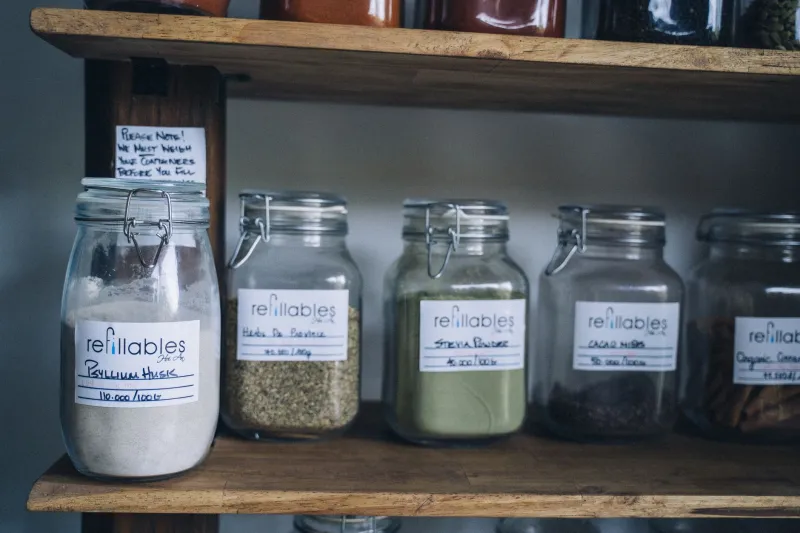
A label is not a personality trait. It is a shortcut for future-you, who will be tired on Wednesday and will not remember whether that tub was cooked on Sunday or Tuesday. Write the contents and the date it was cooked. If you freeze it, add the date it went into the freezer too.
As a simple fridge rule, eat cooked leftovers within two days. If you are not going to manage that, freeze them on the day you cook them, or at least before that two-day mark. And do not rely on the sniff test alone. Food that looks and smells fine can still carry bacteria that make you ill. If something is genuinely in doubt, bin it — but do not bin good food just because it has spent a night in the fridge.
Rice has its own timetable
Cooked rice is the one leftover that deserves its own note. The NHS advises cooling rice as quickly as possible — within one hour — and then putting it in the fridge. Eat it within 24 hours, and reheat it thoroughly until it is steaming hot all the way through. Do not reheat rice more than once.
That means if you cook a big batch of rice for a curry, cool the extra portion promptly, refrigerate it, and plan it for lunch the next day rather than leaving it for the weekend. It is not difficult, but it is worth remembering because rice behaves differently from a tub of soup.
Reheat once, and mean it
When you reheat leftovers, aim for steaming hot throughout, not just warm at the edges. Stir midway through microwave reheating so the heat is even. For soups and sauces, bring them to a simmer or boil, then stir. If you are taking a portion from a larger tub, take only what you need. Reheating the whole pot again and again is where leftovers start to feel riskier than they need to.
As a rule, reheat only once. If you have doubts about whether a portion has already been through the microwave, treat it as finished and start something else.
Freeze in portions, defrost in the fridge
Freezing is the quiet hero of the leftovers routine. Portion cooked food into meal-sized containers, label them, and freeze on the day you cook or within the safe fridge window. Thin portions freeze faster and defrost more evenly than one giant block.
Defrost in the fridge, not on the kitchen counter. As a practical rule, use defrosted leftovers within 24 hours, and only reheat them once. If the pack or your own notes say to cook from frozen, follow that; otherwise, defrost first so the food heats evenly.
The five-minute Sunday habit
This is not meal prep in the Instagram sense. It is just a small bit of tidying while the kitchen is still warm. Before you sit down, or while the plates are being cleared, pull out two or three containers. Spoon in portions. Add a strip of tape. Write the date. Stack them sensibly.
That five minutes buys you a reliable lunch on Tuesday and takes the guesswork out of Thursday's dinner. It also makes better use of the food you have already paid for, which matters in any year, including 2026.
The bottom line
Cool food within two hours, split big pots, keep the fridge cold, label what you store, eat fridge leftovers within two days, treat rice to a 24-hour rule, reheat once until steaming hot, and freeze in portions before you reach the edge of safety. None of this requires perfection. It just requires a few small habits that make leftovers feel like a shortcut again — which is exactly what they should be.